
TRAINING & CAPACITY BUILDING
At R.G. Foundation, we organize training & capacity building programs that positively influence individual and community towards socio-economic development. We conduct capacity building training programmes for the poor & marginalized living in rural or peri-urban areas to give them opportunity to acquire the skills and knowledge in order to understand, participate actively in and benefit fully from different programs and schemes being run by different Government, Private and Non-governmental institutions which will in turn will raise their living standard, improve quality of life and develop the attitudes needed to bring about the desired developmental change.
We offer need based technical, soft skill and practical programmes such as skill transfer, giving information, awareness raising and encouragement to build the capacities of personnel and communities.
Our training as an element of community mobilizing is aimed at poverty reduction, the strengthening of low income communities in the planning and management of human settlements, community facilities and services, their construction, operation and maintenance. This is training for action, not just for skill transfer or for giving information to individuals.We offer need based technical, soft skill and practical programmes such as skill transfer, giving information, awareness raising and encouragement to build the capacities of personnel and communities.
OUR FOCUS AREAS
1. Economic Empowerment

- Empowering unemployed rural/urban below poverty line youths with knowledge and skills and assist them in self-employment or engage them in income generating activities
- Establishment of institutional support for functional community-based organisations such as farmers, traders and self-help cooperatives for agro-based industries.
- Establishment of market linkages and market information systems.
- Promotion of credit mobilisation and microenterprise development for both men and women groups.
- Empowering women to earn their livelihoods
- FPO and SHG Strengthening and empowering the farmers
2. Social Empowerment
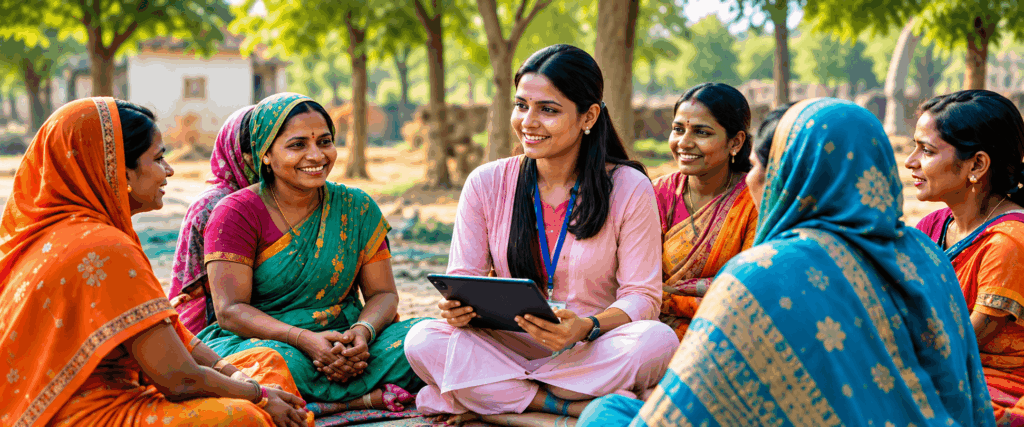
- Promotion of education for children as well as adults through literacy classes and awareness activities.
- In service training of Anganwadi and Balwadi teachers
- To assist 'balwadis' and 'anganwadis' (preschool centres) in introducing or strengthening the activity-based approach
- Promotion of capacity building of communities to identify, plan and implement environmentally sound small scale community development schemes such as health care, sanitation, drinking water, school buildings.
- Promotion of ICT programs for less privileged including minority community
- Strengthening links between communities, local authorities, State and Central Govt
3. Health Development
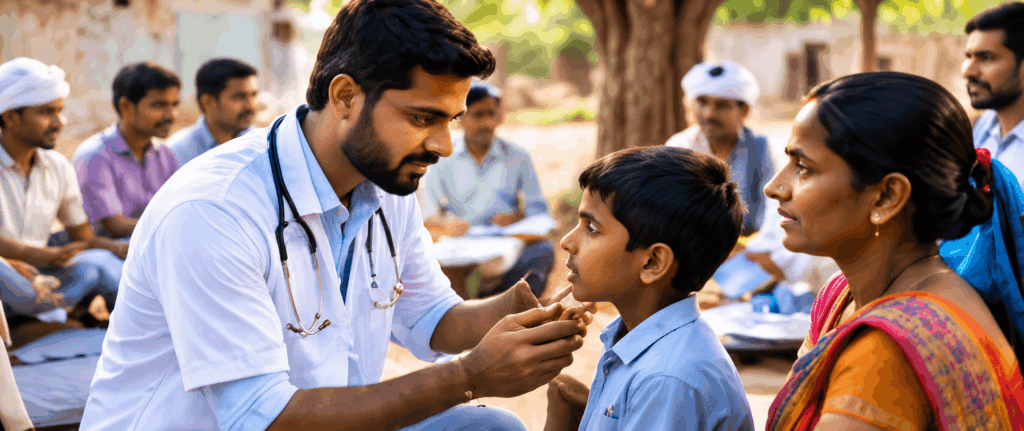
- Promotion of hygiene habits and reducing the rate of sanitation related illnesses among children esp. adolescents girls
- Promotion of Reproductive health and STD/HIV/AIDS prevention services
- In service training of Anganwadi workers on health issues of women and child
- Empowering women with regard to decisions about their sexuality
4. Irrigation Management and Efficiency
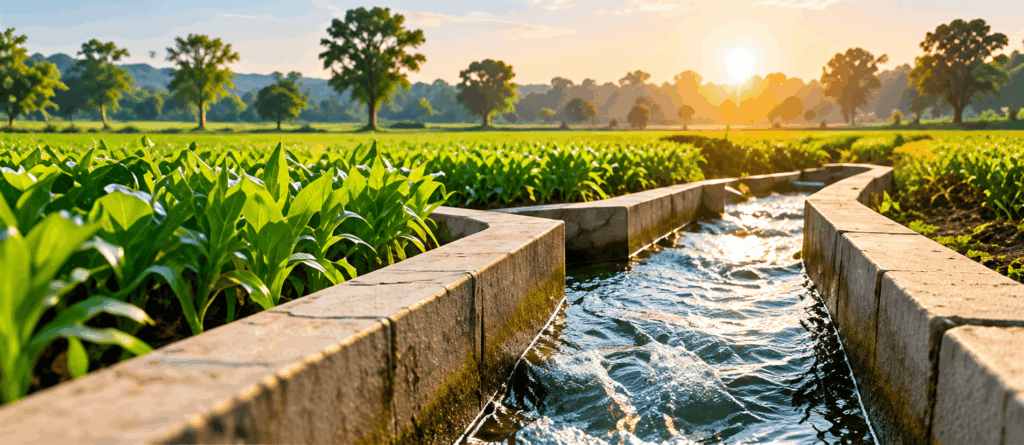
- Training on planning, design, and layout of micro-irrigation systems (drip and sprinkler) for different crops and terrains.
- Demonstrations on installation, operation, and routine maintenance of drip and sprinkler irrigation systems.
- Guidance on irrigation scheduling, water requirement of crops, and use of simple tools (e.g., tensiometers, pan evaporimeters) to optimise water application.
- Capacity building on improving irrigation efficiency, reducing water losses, and managing common field-level challenges (clogging, pressure variation, uneven distribution).
- Orientation on convergence with government schemes such as PMKSY (Per Drop More Crop) for scaling micro-irrigation interventions.
5. Water Conservation and Groundwater Recharge
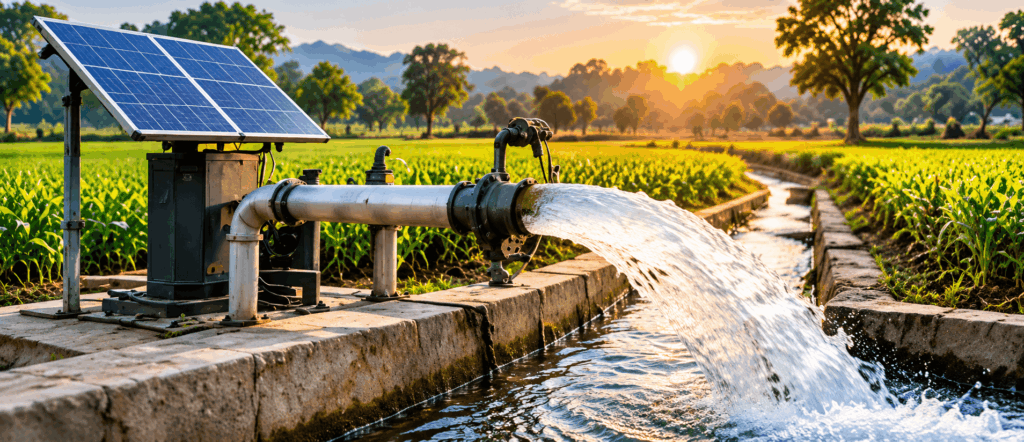
- Training on community-based water conservation planning, including village water budgets and participatory resource mapping.
- Demonstrations on construction and maintenance of check dams, gully plugs, contour trenches, and loose boulder structures to reduce runoff and enhance infiltration.
- Guidance on de-silting and renovation of village ponds, tanks, and traditional water bodies to increase storage capacity.
- Guidance on de-silting and renovation of village ponds, tanks, and traditional water bodies to increase storage capacity.
- Orientation on integrating water conservation works with MGNREGS, IWMP, and state watershed programmes for greater resource leverage.
6. Rainwater Harvesting (RWH)
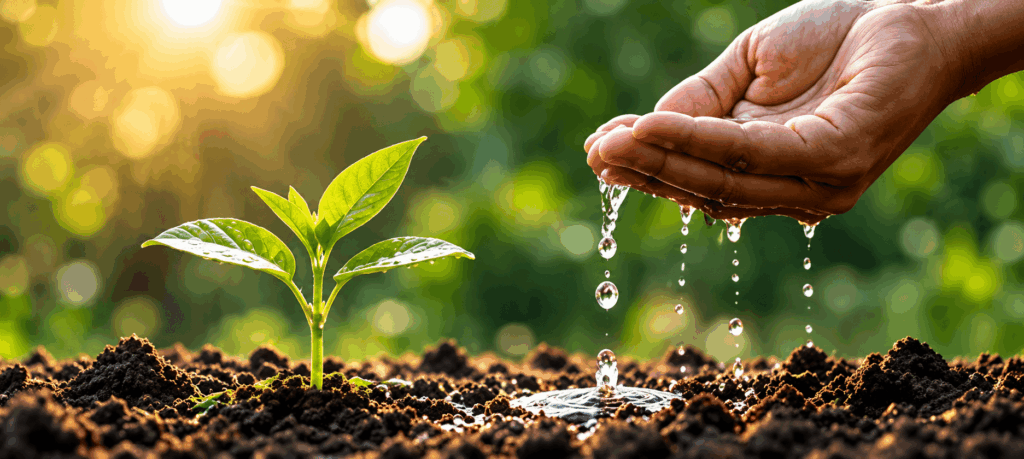
- Training on site-specific design of rooftop rainwater harvesting systems for households, schools, anganwadis, and community buildings.
- Demonstrations on construction of farm ponds, recharge pits, and percolation tanks for agricultural and domestic use.
- Guidance on filtration, first-flush diversion, and basic water quality considerations for harvested rainwater.
- Capacity building on community-led planning, implementation, and O&M (operation and maintenance) of rainwater harvesting structures.
- Orientation on technical and financial aspects of RWH under various government and CSR-supported programmes.
7. Agriculture Development and Climate-Resilient Practices
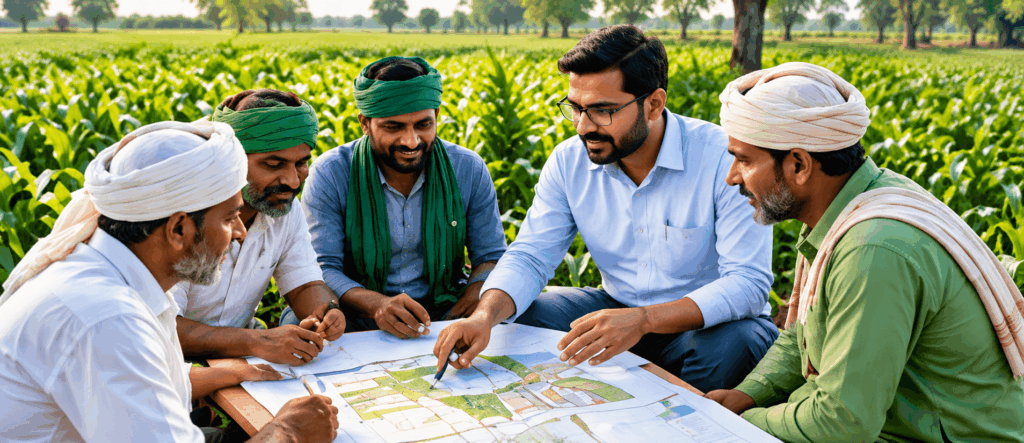
- Training on improved agronomic practices, including timely sowing, line sowing, seed treatment, and optimal plant population.
- Demonstrations on high-yielding, stress-tolerant, and short-duration crop varieties suitable for local agro-climatic conditions.
- Capacity building on soil health management: soil testing, interpretation of soil health cards, balanced fertiliser use, and integrated nutrient management.
- Promotion of climate-resilient practices such as mulching, conservation tillage, crop diversification, and intercropping to reduce risk and stabilise incomes.
- Training on integrated pest and disease management, safe pesticide use, and non-chemical alternatives to reduce input costs and environmental impact.
8. Integrated Farming Systems and Livelihood Diversification

- Demonstrations on integrated farming systems (IFS) combining crops, livestock, fisheries, agroforestry, and horticulture for optimal resource use.
- Training on low-cost, high-return enterprises such as backyard poultry, goat rearing, mushroom cultivation, and kitchen gardening.
- Capacity building on linking agriculture with allied activities to enhance farm incomes and reduce dependence on a single crop or season.
- Orientation on market linkages, value addition, and basic post-harvest management for small and marginal farmers.
- Support to NGOs in designing livelihood promotion strategies that integrate water conservation, irrigation, and agricultural development.
9. Community Mobilisation, Institutions and Governance
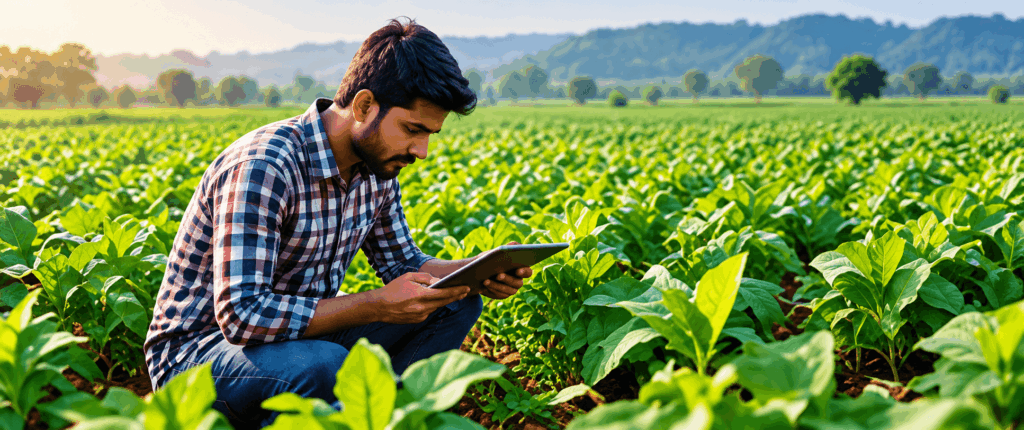
- Training on forming and strengthening water user groups, farmer producer organisations (FPOs), and village-level committees for participatory management of water and agriculture resources.
- Capacity building on participatory planning, conflict resolution around water sharing, and inclusive decision-making (with focus on women and marginalised groups).
- Orientation on roles and responsibilities of community institutions in operation and maintenance of irrigation and water conservation structures.
- Training on social audits, community monitoring, and transparency mechanisms to ensure accountability in resource use.
- Support to NGOs in developing communication and advocacy strategies to influence local governance on water and agriculture issues.
10. Monitoring, Documentation and Knowledge Sharing
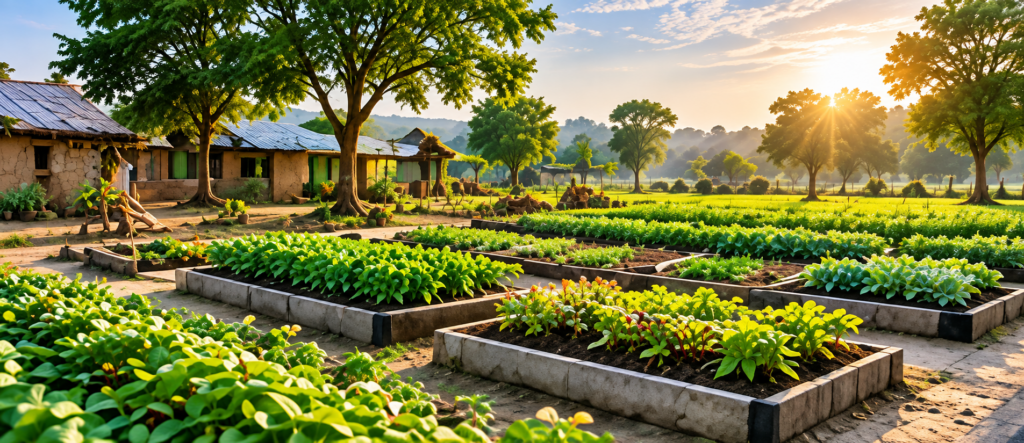
- Training on simple tools and formats for tracking training outcomes, adoption of practices, and changes in water availability and agricultural productivity.
- Capacity building on documenting case studies, success stories, and lessons learned from field interventions.
- Orientation on preparing learning briefs, photo stories, and short videos to showcase impact for donors, CSR partners, and government stakeholders.
- Support to NGOs in developing internal knowledge repositories and sharing mechanisms to institutionalise learning.
- Training on using basic data for adaptive management—refining strategies based on field feedback and results.
11. Training-of-Trainers (ToT) and Institutional Capacity Building
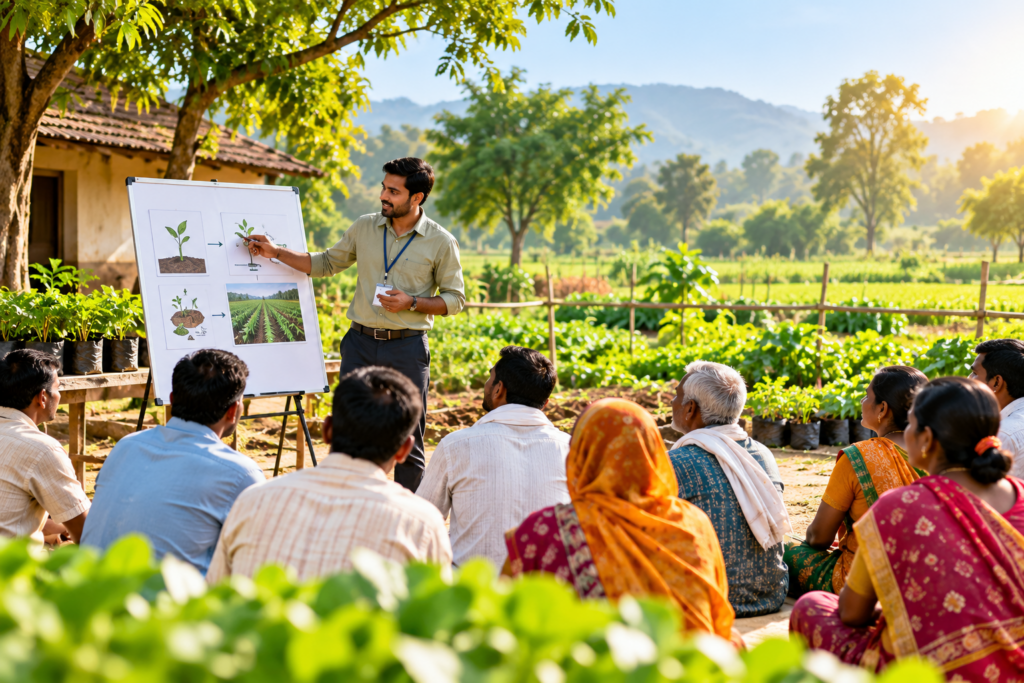
- Design and delivery of ToT modules to build a cadre of master trainers within NGOs and partner networks.
- Training on adult-learning principles, participatory methods, and field-based demonstration techniques.
- Capacity building on developing context-specific training materials, job aids, flip charts, and simplified technical manuals.
- Orientation on planning and conducting refresher trainings, exposure visits, and farmer field days for continuous learning.
- Support to NGOs in institutionalising training systems, including annual training plans, trainer pools, and feedback mechanisms.
OUR 6 STAGE APPROACH
We use participatory research tools combined with effective communication techniques. This approach enables people to think critically and express their views freely, overcoming inhibitions and social barriers. We blend classroom teaching with two-way interaction to inform, educate, and empower the target group. Our efforts go beyond skill training; we motivate and equip participants with practical techniques, ideas, and information that enable them to sustain improvements even after the training ends.
INTERACTIVE TRAINING METHODS
To make sessions interactive and engaging, we use a variety of methods, including group and plenary discussions, case studies, group and individual exercises, formal and informal question-and-answer sessions, and real-life examples drawn preferably from the local context. These methods ensure that learning is participatory, contextual, and retained by participants.
Discussions
Case Studies
Group Exercises
Individual Exercises
Formal / Informal Q&A
Real-Life Example (Preferably Local)
Role Play
Picture Reading
Informal Chit-Chat
Sharing of Opinions / Experiences
Games
Structured Exercise
Recapitulation Exercises
Story Telling
Group Discussion
Show Card Views
OUR TRAINING TEAM
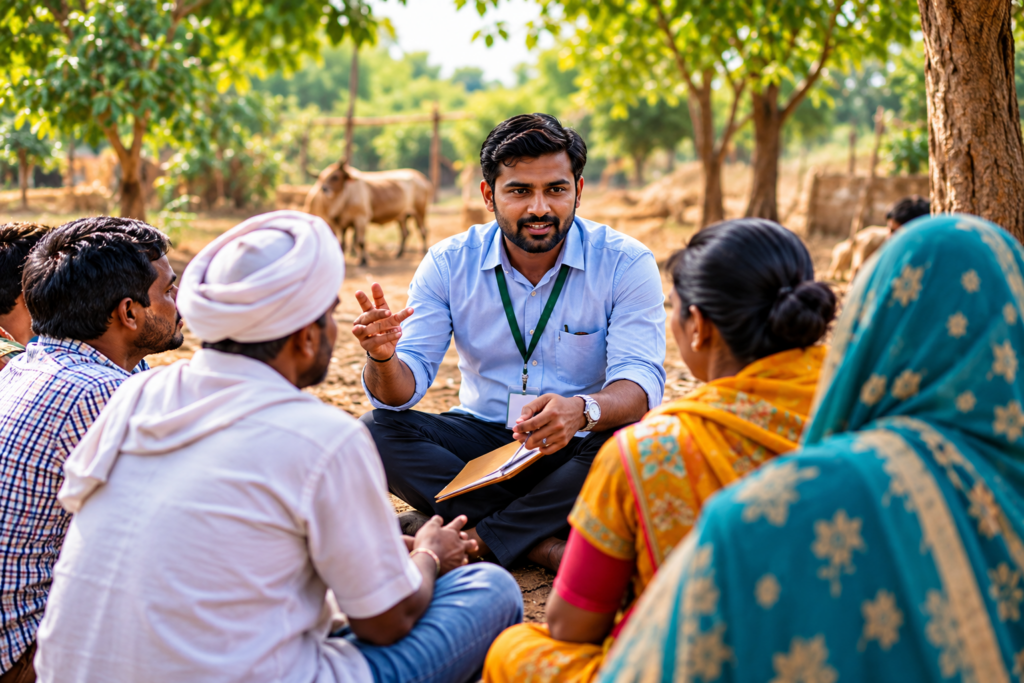
All training programs are conducted by our capacity-building experts. Our training programs are delivered by a dedicated team of resource persons, scientists, subject experts, trainers, facilitators, and volunteers. In addition, we form a Training Steering Group (TSG) to guide, supervise, and coordinate among different stakeholders during capacity-building programmes. The TSG ensures quality, coherence, and alignment with project goals and community needs.
OUR COMMITMENT
R.G. Foundation aims to bring about—or support processes that lead to—major positive change in the lives of the poor, the marginalised, and the disadvantaged sections of society. To achieve this, we organise diverse types of capacity-building programmes tailored to the needs of individuals, community groups, and organisations.We view capacity building as a process of assisting individuals or groups to identify and articulate key issues and challenges, gain the insights, knowledge, and experience needed to solve problems, and implement meaningful and lasting change.